
Our various wood line
goes with
our finest product line
SYCAMORE MAPLE
Sycamore Maple is a woody tree type that has become popular in many world timber markets from America to Asia. This wood reminds us of Sycamore wood. They have many similar characteristics, often confusing people and making them difficult to distinguish. So what are the affinities and contrasts between Sycamore Maple and Sycamore wood? Would it be better? Let's find the answer through this article.
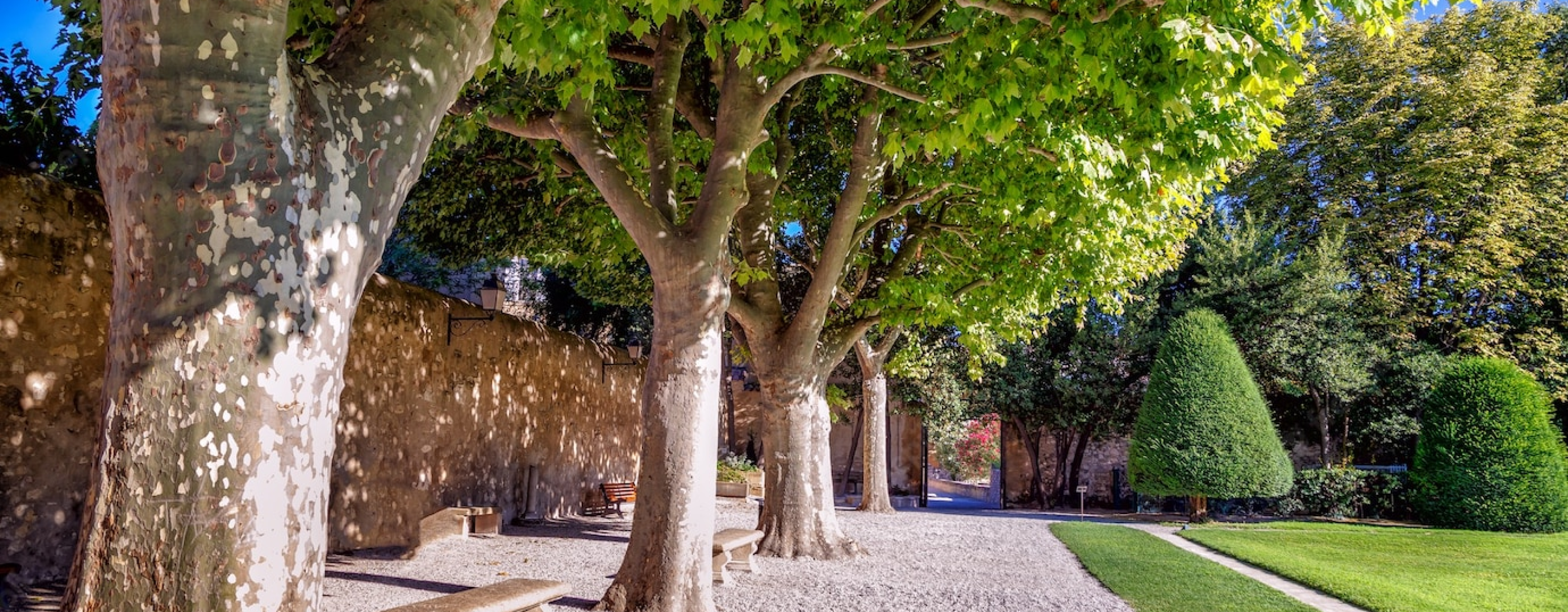
Old Sycamore Maple trees in Aix-en-Provence, France
BRIEF
Sycamore Maple has the scientific name Acer Pseudoplatanus. Because of its similarity to the American Sycamore, it is often called the 'European sycamore' in the British Isles and the 'Sycamore Maple' in the USA. Sycamore Maple is a flowering species in the Maple genus, Sapindaceae family. This is a broad-leaved, deciduous tree with an ample woody body that can withstand the wind and the coastal climate. It has a wide distribution, spreading from Central Europe to Western Asia, from eastern France to Ukraine, northern regions of Turkey, the Caucasus, southern Italian mountains and northern Iberia.
A full-grown Sycamore Maple can reach a height of 25 - 30m with a diameter of 1 - 1.2m. The branches of Sycamore Maple form a broad and round canopy. When young, its bark is gray and smooth, then later flakes into irregular patches when older. The Sycamore Maple leaf blade is long, large, and sleek, with five lobes spread widely. The flowers are yellow-green, drooping in clusters at the flower head. They produce a lot of pollen and nectar that are attractive to insects. The winged seeds are born in pairs freely in the spring and twist to the ground when ripping.
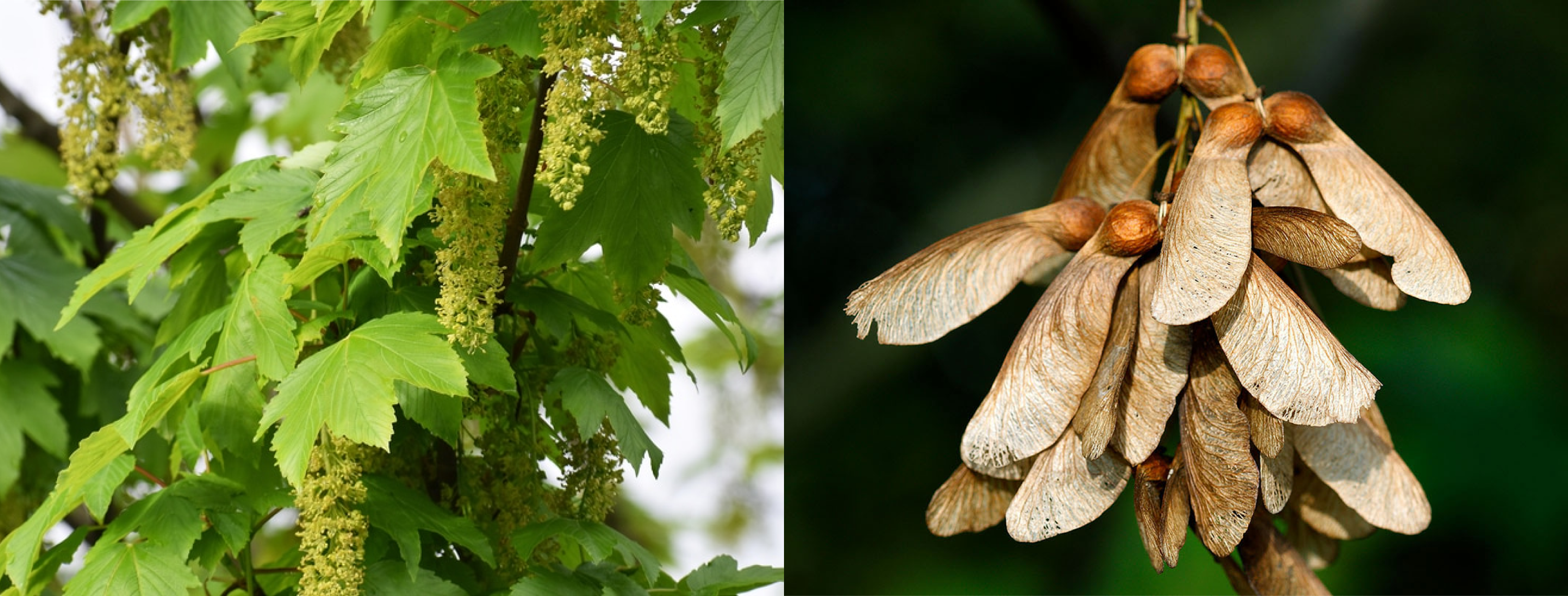
Leaves, flowers and fruits of Sycamore Maple tree
Nectar and dull yellow pollen of Sycamore Maple are collected by honeybees as a food source. Both male and female flowers produce plentiful amounts of nectar that contribute to a sweet-smelling, light-tasting and pale-colored honey. The tree's resin thrives in spring and can be harvested to provide beverages, as a source of sugar, and to make syrup or beer.
Sycamore Maple wood is relatively hard with white or cream sapwood; it may turn yellow when aging. Wood can be worked and sawn in multiple directions, commonly used to make musical instruments, furniture, and flooring. Due to its resistance to stain when in contact with grease, it is also used to make kitchen tools such as wooden spoons, bowls, rolling pins, and cutting boards. Besides, this traditional wood can be used to produce the backs, necks, and reels of violins.
There are some specific features that we should notice to distinguish between European Sycamore (Sycamore Maple) and American Sycamore (Sycamore). American Sycamore wood has a unique grain compared to European Sycamore, which is often used for decorative panels. However, Sycamore Maple has even and higher parameters than American Sycamore including hardness, elasticity, compressive strength, and bending resistance.
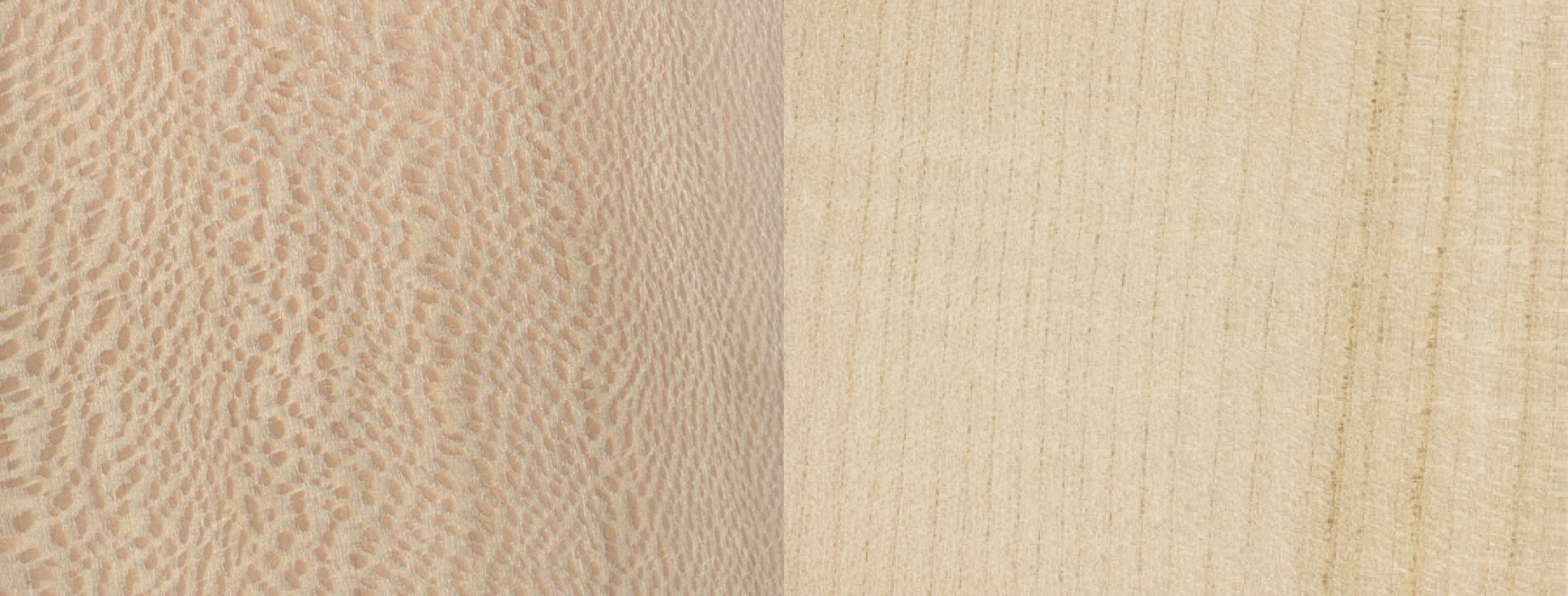
Sycamore wood grain (1) and Sycamore Maple wood grain (2)
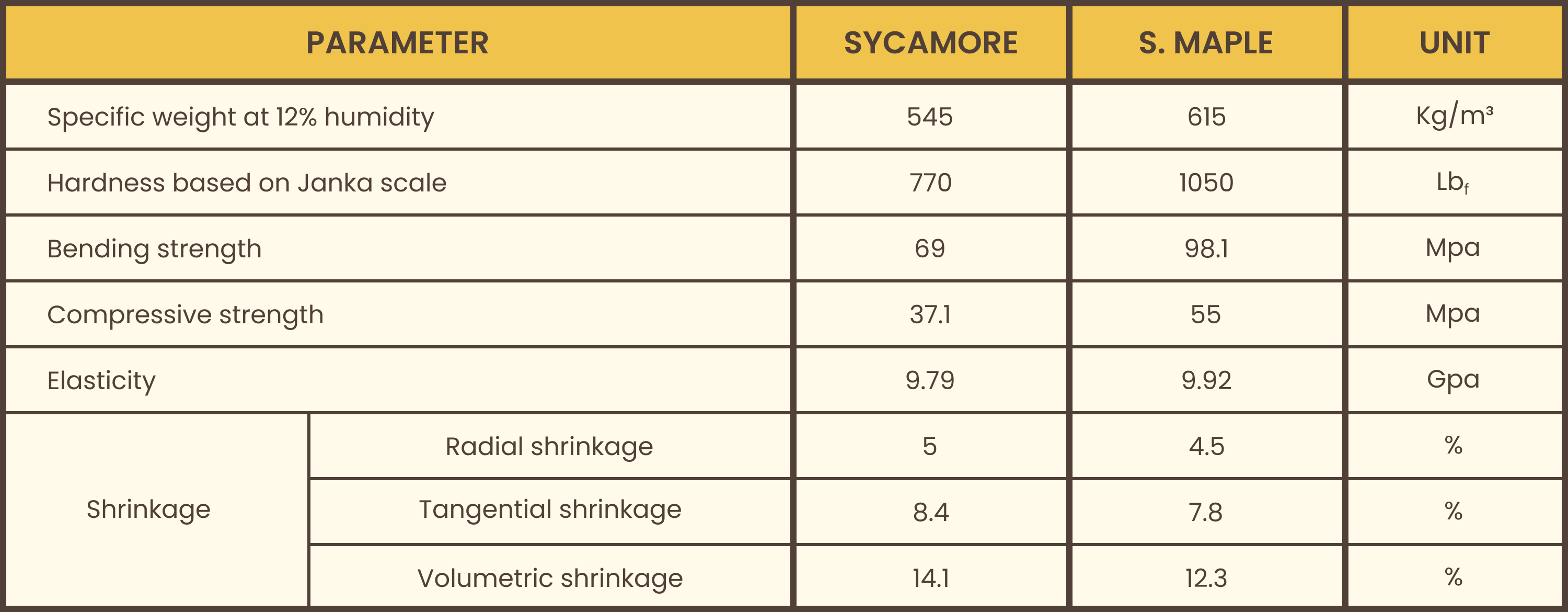
Comparative parameters between Sycamore and Sycamore Maple
PROS AND CONS
PROS
The parameters of Sycamore Maple are pretty regular; its density, hardness, and elasticity are all quite good.
Affordable and easy to access.
Sycamore Maple wood is suitable for making wood decorations and producing musical instruments. This type of wood is resistant to cracking because of its interlocking wood grain. Besides, it has the ability to reverse color, glue and finish well. When carefully colored and polished, products which are made from Sycamore Maple usually have very high beauty and quality.
Easy to work with both hand tools and machines.
It can be used to make kitchen tools due to its stainless ability when in contact with grease.
Pine wood is generally used in major constructions.
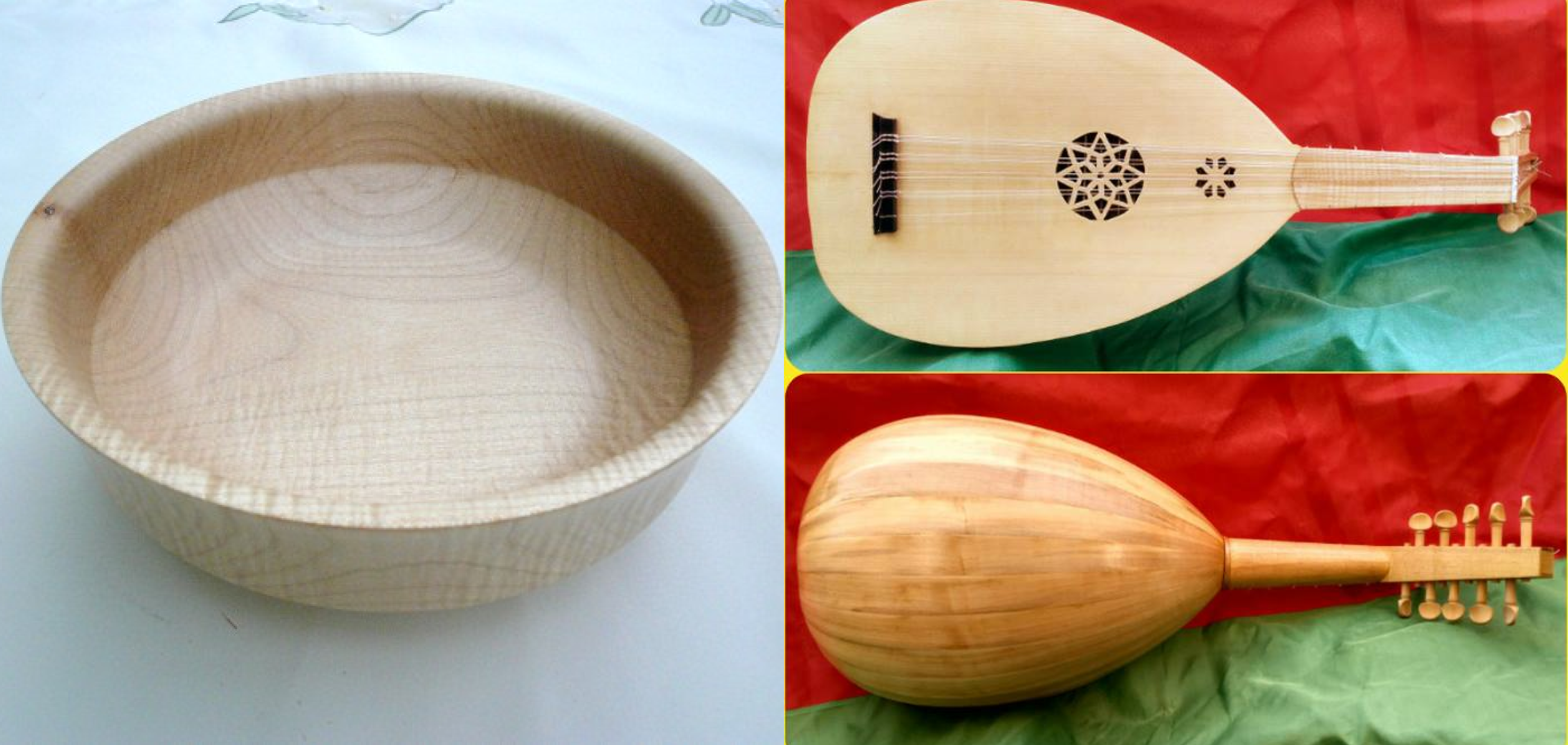
Wooden bowl and traditional instruments made from Sycamore Maple wood
CONS
The resistance to decomposition and termites of Sycamore Maple wood is relatively poor, so it is a must for the drying process to be done correctly. Despite its feeble termite resistance, Maple Sycamore is very permeable to preservatives.
Wood dust is easy to causes mild skin irritation, affecting breathing.
Easy to burn when machining with the high-speed cutting engine.
Likely appear spots on the surface when applying color, requiring careful processing and glue coating.
SUMMARY
Thus, Sycamore Maple and Sycamora are two completely divergent types of wood. Sycamore has a more unique color and texture, so that it is often used to produce ornamental products. Meanwhile, Sycamore Maple has better physical properties that can be used for more purposes. Hopefully, after this article, customers will have a better point of view about Sycamore Maple and no longer be confused between Sycamore and Sycamore Maple.